
 ,
Sameh Boughattas,
Lamia Tilouche,
Soumaya Ketata,
Yomna Ben Lamine,
Abdelhalim Trabelsi
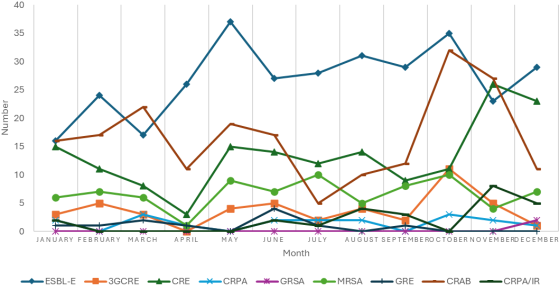
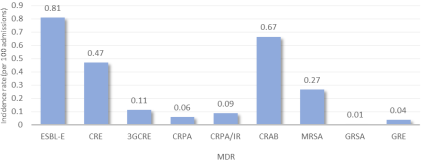
The development of antibiotics has significantly reduced mortality from bacterial infections; however, the emergence of antimicrobial-resistant bacteria poses a global threat. In response, an international action plan was launched, and Tunisia has participated by implementing a national program to monitor bacterial resistance to antibiotics. This study aimed to identify multidrug-resistant (MDR) bacteria isolated at Sahloul University Hospital in 2022, determine their prevalence and annual incidence, and describe their epidemiological and microbiological profiles. This cross-sectional study included all bacterial strains isolated from clinical specimens collected from patients at Sahloul University Hospital, Sousse, between January 1 and December 31, 2022. Among 3,207 clinical specimens analyzed, 865 MDR strains were identified, corresponding to an overall prevalence of 27%. Klebsiella pneumoniae and Acinetobacter baumannii accounted for 32.8% and 23.1% of the isolates, respectively. Extended-spectrum β-lactamase-producing Enterobacterales (ESBL-E) represented 37.3% of MDR isolates, followed by carbapenem-resistant A. baumannii (CRAB, 23.1%) and carbapenem-resistant Enterobacterales (CRE, 18.6%). The most affected departments were the surgical intensive care unit (22.5%), urology (13.4%), and nephrology (11.9%). MDR strains were mainly isolated from urine (44.2%), blood cultures (13.1%), and protected specimen brush samples (12.1%). Monthly trends showed fluctuations, with ESBL-E ranging from 16 to 37 cases per month and CRAB from 5 to 32 cases per month. Annual incidence rates were 0.67 per 100 admissions for CRAB, 0.47 per 100 admissions for CRE, and 0.26 per 100 admissions for methicillin-resistant Staphylococcus aureus (MRSA). All CRAB strains were resistant to ciprofloxacin, and 95.2% were resistant to gentamicin. Among the 33 CRE isolates tested for colistin susceptibility, 3 were resistant. In our hospital, the main MDR pathogens were ESBL-E, CRAB, and CRE, with the surgical intensive care unit, urology, and nephrology departments being the most affected. These findings highlight the need for urgent and targeted interventions to control the spread of MDR bacteria and strengthen antimicrobial resistance surveillance and infection prevention and control measures.
| Published in | Biomedical Sciences (Volume 12, Issue 3) |
| DOI | 10.11648/j.bs.20261203.12 |
| Page(s) | 58-79 |
| Creative Commons |
This is an Open Access article, distributed under the terms of the Creative Commons Attribution 4.0 International License (http://creativecommons.org/licenses/by/4.0/), which permits unrestricted use, distribution and reproduction in any medium or format, provided the original work is properly cited. |
| Copyright |
Copyright © The Author(s), 2026. Published by Science Publishing Group |
Multidrug-resistant Bacteria, Epidemiology, Microbiology, Prevalence, Surveillance
Germe | N MDR | % of total MDR isolates | Total N of bacterial species | % of isolates within the bacterial species |
|---|---|---|---|---|
Klebsiella pneumoniae | 284 | 32,8 | 668 | 42,5% |
Acinetobacter baumannii | 200 | 23,1 | 236 | 84,7% |
Escherichia coli | 177 | 20,5 | 1228 | 14,4% |
Staphylococcus aureus | 82 | 9,5 | 416 | 19,7% |
Enterobacter cloacae | 47 | 5,4 | 195 | 24,1% |
Pseudomonas aeruginosa | 43 | 5,0 | 308 | 14,0% |
Proteus mirabilis | 21 | 2,4 | 111 | 18,9% |
Enterococcus faecium | 11 | 1,3 | 45 | 24,4% |
Total | 865 | 100,0 | 3027 | - |
Phenotype | N | % |
|---|---|---|
ESBL-E | 323 | 37,3 |
CRAB | 200 | 23,1 |
CRE | 161 | 18,6 |
MRSA | 80 | 9,2 |
3GCRE | 45 | 5,2 |
CRPA/IR | 25 | 2,9 |
CRPA | 18 | 2,1 |
GRE | 11 | 1,3 |
GRSA | 2 | 0,2 |
Total | 865 | 100 |
Enterobacterales | ESBL-E N (%) | 3GCRE N (%) | CRE N (%) | Total |
|---|---|---|---|---|
Klebsiella pneumoniae | 154(47,7) | 15(33,3) | 115(71,4) | 284 |
Escherichia coli | 159 (49,2) | 12 (26,7) | 6 (3,7) | 177 |
Proteus mirabilis | 5 (1,5) | 1 (2,2) | 15 (9,3) | 21 |
Enterobacter cloacae | 5 (1,5) | 17 (37,8) | 25 (15,5) | 47 |
Total | 323 | 45 | 161 | 529 |
Department | N | % | ||
|---|---|---|---|---|
Surgical Intensive Care | Surgical Intensive Care Unit | 119 | 13,8 | 22,5 |
POG | 73 | 8,4 | ||
Anesthesia Outpatient Consultations | 3 | 0,3 | ||
Urology | Urology Inpatients | 49 | 5,7 | 13,4 |
Urology Outpatient Consultations | 67 | 7,7 | ||
Nephrology | Nephrology Inpatients | 50 | 5,8 | 11,9 |
Nephrology Outpatient Consultations | 48 | 5,5 | ||
DPC-Unit | 4 | 0,5 | ||
HD- Unit | 1 | 0,1 | ||
CVTS | CVTS Inpatients | 36 | 4,2 | 9,3 |
Post-Pediatric CVTS | 30 | 3,5 | ||
Post-Operative CVTS | 14 | 1,6 | ||
Orthopedics | 75 | 8,7 | ||
General Surgery | 55 | 6,4 | ||
Emergency Department | Emergency Admissions | 44 | 5,1 | 6,0 |
Emergency Outpatient Consultations | 8 | 0,1 | ||
Pediatrics | Pediatric Inpatients | 40 | 4,6 | 5,4 |
Pediatric Outpatient Consultations | 1 | 0,1 | ||
Pediatric Emergency | 6 | 0,7 | ||
Neurosurgery | 23 | 2,7 | ||
Physical Medicine | 19 | 2,2 | ||
Medical Intensive Care Unit | 18 | 2,1 | ||
Others | 82 | 9,4 | ||
Total | 865 | 100,0 | ||
Department | ESBL-E | 3GCRE | CRE | CRPA | CRPA/IR | CRAB | GRSA | MRSA | GRE | Total |
|---|---|---|---|---|---|---|---|---|---|---|
Medical Departments: n (%) | 98(30,3) | 14(31,1) | 17(10,6) | 3(16,7) | 5(20) | 14(7) | 0 | 19(23,7) | 2(18,2) | 172(19,9) |
Surgical Departments: n (%) | 83(25,7) | 12(26,7) | 41(25,5) | 8(44,4) | 12(48) | 43(21,5) | 1(50) | 51(63,7) | 5(45,5) | 256(29,6) |
ntensive Care Units: n (%) | 28(8,7) | 3(6,7) | 72(44,7) | 3(16,7) | 8(32) | 130(65) | 0 | 6(7,5) | 4(36,4) | 254(29,4) |
Outpatient Departments: n (%) | 79(24,5) | 12(26,7) | 24(14,9) | 1(5,6) | 0 | 9(4,5) | 0 | 0 | 0 | 125(14,5) |
Emergency Departments (Adult + Pediatric): n (%) | 35(10,8) | 4(8,9) | 7(4,3) | 3(16,7) | 0 | 4(2) | 1(50) | 4(5) | 0 | 58(6,7) |
Total: n (%) | 323(100) | 45(100) | 161(100) | 18(100) | 25(100) | 200(100) | 2(100) | 80(100) | 11(100) | 865(100) |
Service | ESBL-E | 3GCRE | CRE | CRPA | CRPA/IR | CRAB | GRSA | MRSA | GRE | Total |
|---|---|---|---|---|---|---|---|---|---|---|
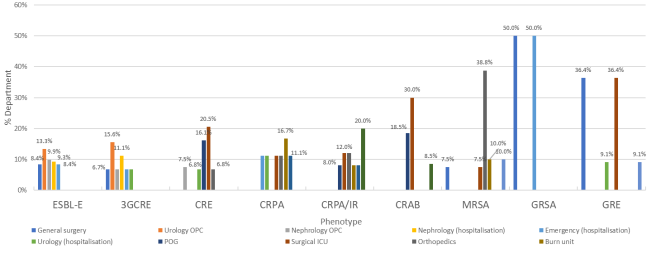
Surgical Intensive Care: n (%) | 16(8,4) | 3(1,5) | 61(32,1) | 3(1,5) | 5(2,6) | 97(51) | 0 | 6(3,1) | 4(2,1) | 190(100) |
POG: n (%) | 7(9,6) | 0 | 26(35,6) | 1(1,4) | 2(2,7) | 37(50,7) | 0 | 0 | 0 | 73(100) |
Surgical Intensive Care Unit: n (%) | 9(7,6) | 2(1,7) | 33(27,7) | 2(1,7) | 3(2,5) | 60(50,4) | 0 | 6(5) | 4(3,4) | 119(100) |
Anesthesia Outpatient Consultations: n (%) | 0 | 1(33,3) | 2(66,7) | 0 | 0 | 0 | 0 | 0 | 0 | 3(100) |
Urology: n (%) | 67(57,7) | 10(8,6) | 21(18,1) | 2(1,7) | 0 | 14(12) | 0 | 1(0,8) | 1(0,8) | 116(100) |
Nephrology Outpatient Consultations: n (%) | 43(64,2) | 7(10,4) | 10(14,9) | 0 | 0 | 7(10,4) | 0 | 0 | 0 | 67(100) |
Urology Inpatients: n (%) | 24(49) | 3(6,1) | 11(22,4) | 2(4,1) | 0 | 7(14,3) | 0 | 1(2) | 1(2) | 49(100) |
Nephrology: n (%) | 65(61,9) | 10(9,5) | 19(18) | 1(0,95) | 0 | 7(6,66) | 0 | 3(2,85) | 0 | 105(100) |
Nephrology Outpatient Consultations: n (%) | 32(66,7) | 3(6,3) | 12(25) | 0 | 0 | 1(2,1) | 0 | 0 | 0 | 48(100) |
Nephrology Inpatients: n (%) | 30(60) | 5(10) | 7(14) | 1(2) | 0 | 6(12) | 0 | 1(2) | 0 | 50(100) |
DPC-Unit: n (%) | 2(50) | 0 | 0 | 0 | 0 | 0 | 0 | 2(50) | 0 | 4(100) |
HD- Unit: n (%) | 1(100) | 0 | 0 | 0 | 0 | 0 | 0 | 0 | 0 | 1(100) |
CVTS (total): n (%) | 14(17,5) | 2(2,5) | 18(22,5) | 0 | 8(10) | 36(45) | 0 | 2(2,5) | 0 | 80(100) |
CVTS Inpatients: n (%) | 5(13,9) | 1(2,8) | 6(16,7) | 0 | 5(13,9) | 17(47,2) | 0 | 2(5,6) | 0 | 36(100) |
Post-Operative CVTS : n (%) | 1(7,1) | 0 | 3(21,4) | 0 | 1(7,1) | 9(64,3) | 0 | 0 | 0 | 14(100) |
Post-Pediatric CVTS: n (%) | 8(26,7) | 1(3,3) | 9(30) | 0 | 2(6,7) | 10(33,3) | 0 | 0 | 0 | 30(100) |
Orthopedics: n (%) | 17(22,7) | 2(2,7) | 11(14,7) | 2(2,7) | 3(4) | 9(12) | 0 | 31(41,3) | 0 | 75(100) |
General Surgery: n (%) | 27(49,1) | 3(5,5) | 8(14,5) | 1(1,8) | 1(1,8) | 4(7,3) | 1(1,8) | 6(10,9) | 4(7,3) | 55(100) |
Emergency Department : n (%) | 31(59,6) | 3(5,8) | 7(13,4) | 3(5,8) | 0 | 4(7,6) | 1(2) | 3(5,8) | 0 | 52(100) |
Emergency Admissions: n (%) | 27(61,4) | 3(6,8) | 5(11,4) | 2(4,5) | 0 | 3(6,8) | 1(2,3) | 3(6,8) | 0 | 44(100) |
Emergency Outpatient Consultations: n (%) | 4(50) | 0 | 2(25) | 1(12,5) | 0 | 1(12,5) | 0 | 0 | 0 | 8(100) |
Pediatrics: n (%) | 31(66) | 3(6,3) | 2(4,2) | 0 | 0 | 1(2,2) | 0 | 9(19,1) | 1(2,2) | 47(100) |
Pediatric Emergency: n (%) | 4(66,7) | 1(16,7) | 0 | 0 | 0 | 0 | 0 | 1(16,7) | 0 | 6(100) |
Pediatric Inpatients: n (%) | 26(65) | 2(5) | 2(5) | 0 | 0 | 1(2,5) | 0 | 8(20) | 1(2,5) | 40(100) |
Pediatric Outpatient Consultations: n (%) | 1(100) | 0 | 0 | 0 | 0 | 0 | 0 | 0 | 0 | 1(100) |
Neurosurgery: n (%) | 9(39,1) | 2(8,7) | 4(17,4) | 0 | 1(4,3) | 4(17,4) | 0 | 3(13) | 0 | 23(100) |
Physical Medicine: n (%) | 4 (21,1) | 2(10,5) | 3(15,8) | 2(10,5) | 2(10,5) | 4(21,1) | 0 | 2(10,5) | 0 | 19(100) |
Medical Intensive Care Unit: n (%) | 3(16,7) | 0 | 1(5,6) | 0 | 0 | 14(77,8) | 0 | 0 | 0 | 18(100) |
Others*: n (%) | 40(48,7) | 5(6) | 6(7,3) | 4(4,9) | 5(6) | 6(7,3) | 0 | 15(18,2) | 1(1,2) | 82(100) |
Total | 323(37,3) | 45(5,2) | 161(18,6) | 18(2) | 25(2,9) | 200(23,1) | 2(0,2) | 80(9,2) | 11(1,3) | 865(100) |
Sample | N | % |
|---|---|---|
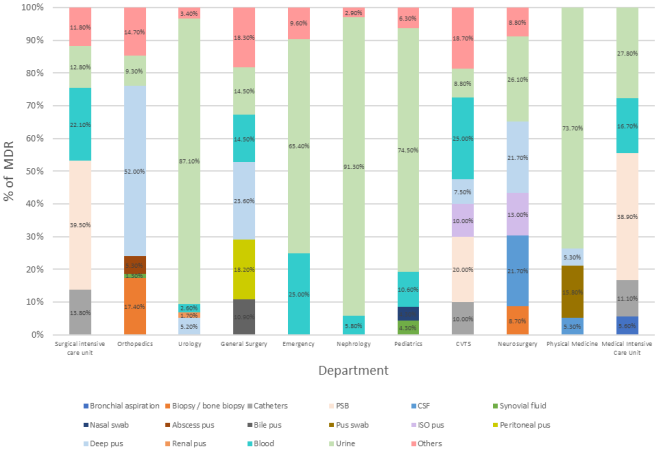
Urine | 382 | 44,2 |
Blood | 113 | 13,1 |
protected specimen brush | 105 | 12,1 |
Deep pus | 72 | 8,3 |
Catheter | 45 | 5,2 |
Operative site infection pus (ISO) | 24 | 2,8 |
Biopsy | 25 | 2,9 |
Swab pus | 20 | 2,3 |
Peritoneal pus | 10 | 1,2 |
Others* | 69 | 7,9 |
Total | 865 | 100 |
Sample | EBLSE: n (%) | 3GCRE: n (%) | CRE: n (%) | CRPA: n (%) | CRPA/I: n (%) | CRAB: n (%) | GRSA: n (%) | MRSA: n (%) | GRE: n (%) | Total |
|---|---|---|---|---|---|---|---|---|---|---|
Biopsy | 34(2,1) | 0 | 4(2,5) | 3(16,6) | 2(8) | 4(2) | 0 | 4(5,1) | 0 | |
PSB | 4(1,2) | 2(4,4) | 17(10,6) | 2(11,1) | 7(28) | 69(34,5) | 0 | 4(5,1) | 0 | |
Pleural fluid | 1(0,3) | 0 | 0 | 0 | 3(12) | 2(1) | 0 | 0 | 0 | |
Deep pus | 15(4,6) | 2(4,4) | 14(8,7) | 1(5,6) | 4(16) | 11(5,5) | 1(50) | 23(29,1) | 1(9,1) | |
Blood | 25(7,7) | 3(6,7) | 26(16,1) | 4(22,2) | 1(4) | 33(16,5) | 1(50) | 16(20,3) | 4(36,4) | |
Urine | 233(72,1) | 31(68,9) | 61(37,9) | 6(33,3) | 2(8) | 41(20,5) | 0 | 5(6,3) | 3(27,3) | |
Catheter | 3(0,9) | 1(2,2) | 18(11,2) | 0 | 2(8) | 17(8,5) | 0 | 4(5,1) | 0 | |
Others | 35(10,8) | 6(13,3) | 21(13) | 2(11,1) | 4(16) | 23(11,5) | 0 | 24(29,1) | 3(27,2) | |
Total | 323(100) | 45(100) | 161(100) | 18(100) | 25(100) | 200(100) | 2(100) | 80(100) | 11(100) | 865 |
Antibiotic | E.coli ESBL n/N (%) | K.pneumoniae ESBL n/N (%) | P.mirabilis ESBL n/N (%) | E.cloacae ESBL n/N (%) | Total ESBL-E n/N (%) |
|---|---|---|---|---|---|
Ampicillin | 159/159(100) | - | 5/5 | - | 164/164(100) |
Ticarcillin | 159/159(100) | - | NT | 5/5 | 164/164(100) |
Piperacillin | 159/159(100) | - | 0/1 | 5/5 | 164/165(99) |
Amoxicillin/Clavulanic acid | 108/155(69,7) | 95/153(62,1) | 2/2 | - | 205/310(66) |
Amoxicillin/Clavulanic acid (Cystitis) | 14/61(22,9) | 19/67(28,3) | 3/3 | - | 36/131(27) |
Ampicillin/sulbactam | NT | 1/5 | NT | 1/5 | |
Piperacillin/tazobactam | 35/158(22,2) | 35/154(22,7) | NT | 5/5 | 75/317(23,6) |
Cephalexin | 159/159(100) | 154/154(100) | 4/4 | - | 317/317(100) |
Cefoxitin | 12/159(7,8) | 33/153(21,6) | 1/3 | - | 46/315(14,6) |
Cefuroxime | NT | 5/5 | NT | 5/5 | |
Cefixime (Cystitis) | NT | 2/5 | NT | 2/5 | |
Ceftriaxone | NT | 0/5 | NT | 0/5 | |
Cefotaxime | 152/156(97,4) | 149/153(97,3) | NT | 5/5 | 306/314(97,4) |
Ceftazidime | 131/159(82,5) | 142/152(93,4) | NT | 4/4 | 277/315(88) |
Cefepime | NT | 7/7(100) | NT | NT | 7/7 |
Ertapenem | 0/152(0) | 0/150(0) | 0/3 | 0/3 | 0/305(0) |
Imipenem | 0/144(0) | 0/145(0) | - | 0/5 | 0/294(0) |
Meropenem | 1/10(10) | 0/5(0) | NT | NT | 1/15 |
Aztreonam | 9/11(81,8) | 1/6(16,7) | NT | 1/1 | 11/18(61) |
Nalidixic acid | 10/13(76,9) | 14/15(93,3) | 4/5 | 1/1 | 29/34(85,3) |
Ofloxacin | 18/25(72) | 15/21(71,5) | 4/4 | 1/1 | 38/51(74,5) |
Norfloxacin | 2/2(100) | 0/1(0) | 5/5 | NT | 7/8 |
Ciprofloxacin | 99/150(66) | 72/152(47,4) | NT | 5/5 | 176/307(57) |
Levofloxacin | 3/5(60) | 0/1(0) | NT | 1/1 | 4/7 |
Moxifloxacin | NT | 3/3 | NT | 3/3 | |
Amikacin | 7/142(4,9) | 4/147(2,7) | 0/1 | 1/5 | 12/295(4) |
Gentamicin | 26/54(48,1) | 34/144(23,6) | NT | 4/4 | 64/202(31,6) |
Tobramycin | 5/15(33,3) | 4/15(26,7) | NT | 1/1 | 10/31(32,2) |
Fosfomycin IV | 9/144(6,3) | 1/12(8,3) | 1/5 | 0/1 | 11/162(6,7) |
Nitrofurantoin (cystitis) | 3/25(12) | 13/15(86,7) | - | 0/1 | 16/41(39) |
Tigecycline | 0/139(0) | 0/5(0) | - | NT | 0/144(0) |
Chloramphenicol | 0/6(0) | 0/2(0) | NT | NT | 0/8 |
Trimethoprim/sulfamethoxazole | 97/156(62,2) | 95/151(62,9) | 1/5 | 5/5 | 198/317(62,4) |
Total | 159 | 154 | 5 | 5 | 323 |
Antibiotic | E. coli CRE n/N (%) | K.pneumoniae CRE n/N (%) | P.mirabilis CRE n/N (%) | E. cloacae CRE n/N (%) | Total CRE n/N (%) |
|---|---|---|---|---|---|
Ampicillin | 6/6 | - | 15/15 | - | 21/21 |
Ticarcillin | 6/6 | - | 13/13 | 23/23 | 42/42(100) |
Piperacillin | 6/6 | - | 12/12 | 25/25 | 43/43(100) |
Amoxicillin/Clavulanic acid | 4/6 | 113/115(98,3) | 14/14 | - | 131/135(97) |
Amoxicillin/Clavulanic acid (Cystitis) | 2/2 | 35/35(100) | 3/3 | - | 40/40(100) |
Piperacillin/tazobactam | 4/5 | 113/115(98,3) | 14/14 | 25/25 | 156/159(98,1) |
Cephalexin | 5/5 | 100/100(100) | 15/15 | - | 120/120(100) |
Cefoxitin | 6/6 | 109/111(98,2) | 15/15 | - | 130/132(98,4) |
Cefotaxime | 4/6 | 112/114(98,2) | 15/15 | 25/25 | 156/160(97,5) |
Ceftazidime | 4/6 | 111/112(99,1) | 15/15 | 25/25 | 155/158(98,1) |
Cefepime | NT | 9/9 | 1/1 | 3/3 | 13/13 |
Ertapenem | 5/5 | 106/106(100) | 15/15 | 25/25 | 151/151 |
Imipenem | 2/6 | 101/111(91) | 11/14 | 14/23 | 128/154(83,1) |
Meropenem | NT | 5/5 | NT | NT | 5/5 |
Aztreonam | NT | 6/6 | 0/1 | 1/1 | 7/8 |
Nalidixic acid | 1/1 | 10/10 | NT | 2/2 | 13/13 |
Ofloxacin | 1/1 | 16/16 | NT | 4/4 | 21/21 |
Norfloxacin | NT | 1/1 | NT | 1/1 | 2/2 |
Ciprofloxacin | 3/6 | 106/112(94,6) | 15/15 | 22/25 | 149/158(94,3) |
Levofloxacin | NT | 4/4 | NT | 1/1 | 5/5 |
Moxifloxacin | NT | NT | NT | 1/1 | 1/1 |
Amikacin | 1/6 | 90/112(80,4) | 14/14 | 0/22 | 105/154(68,1) |
Gentamicin | 1/1 | 83/111(74,8) | 14/14 | 18/23 | 116/149(77,8) |
Tobramycin | 1/1 | 10/11 | NT | 0/2 | 11/14 |
Colistin | 0/1 | 3/27 | - | 0/3 | 3/31 |
Fosfomycin IV | 1/5 | 2/14 | 1/1 | 4/4 | 8/24 |
Nitrofurantoin (cystitis) | NT | 12/12 | - | 4/4 | 16/16 |
Tigecycline | 0/5 | 2/8 | - | NT | 2/13 |
Chloramphenicol | NT | 2/3 | 1/1 | 1/1 | 4/5 |
Trimethoprim/sulfamethoxazole | 3/6 | 93/114(81,6) | 15/15 | 19/25 | 130/160(81,2) |
Total | 6 | 115 | 15 | 25 | 161 |
Antibiotic | CRAB n/N (%) | CRPA n/N (%) | CRPA/IR n/N (%) |
|---|---|---|---|
Ticarcillin | 196/198(99) | 18/18 | 25/25(100) |
Piperacillin | 195/195(100) | 18/18 | 24/24(100) |
Ticarcillin- Clavulanic acid | 10/12 | 6/6 | 6/6 |
Piperacillin/tazobactam | 200/200(100) | 17/18 | 25/25(100) |
Ceftazidime | 200/200(100) | 18/18 | 25/25(100) |
Cefepime | 13/13 | 5/5 | 7/7 |
Ceftazidime/avibactam | NT | NT | 1/1 |
Imipenem | 193/193(100) | 0/18 | 24/24(100) |
Meropenem | 10/11(90,9) | 0/11 | 8/9 |
Aztreonam | NT | 5/6 | 6/7 |
Ciprofloxacin | 189/189(100) | 4/18 | 23/25(92) |
Levofloxacin | NT | 5/7 | 5/6 |
Amikacin | 131/193(67,9) | 1/18 | 21/25(84) |
Gentamicin | 178/187(95,2) | 4/17 | 23/25(92) |
Tobramycin | 9/9 | 0/6 | 5/7 |
Colistin | 1/58 | NT | 0/9 |
Tigecyclin | 11/11 | - | - |
Fosfomycin IV | - | NT | 2/4 |
Trimethoprim/sulfamethoxazole | 117/197(59,4) | - | - |
Total | 200 | 18 | 25 |
Antibiotique | SARM n/N (%) |
|---|---|
Benzylpenicill | 80/80(100) |
Oxacillin | 80/80(100) |
Ampicillin | 79/79(100) |
Amoxicillin/Clavulanic acid | 80/80(100) |
Cefotaxime | 72/72(100) |
Ofloxacin | 10/69(14,4) |
Levofloxacin | 12/78(15,3) |
Ciprofloxacin | 10/74(13,5) |
Moxifloxacin | 10/71(14) |
Gentamicin | 11/78(14,1) |
Kanamycin | 2/5(40) |
Tobramycin | 11/77(14,2) |
Teicoplanin | 0/73(0) |
Vancomycin | 0/74(0) |
Erythromycin | 17/78(21,8) |
Clindamycin | 8/79(10) |
Lincomycin | 4/23(17,4) |
Tetracycline | 27/72(37,5) |
Doxycyclin | 28/70(40) |
Tigecyclin | 3/79(3,7) |
Minocyclin | 1/44(2,3) |
Fusidic acid | 40/76(52) |
Fosfomycin IV | 6/73(8,2) |
Nitrofurantoin | 0/72(0) |
Rifampicin | 3/8(37,5) |
Linézolid | 0/79(0) |
Chloramphenicol | 1/5(20) |
Trimethoprim/sulfamethoxazole | 8/76(10,5) |
Total | 80 |
3GCRE | Enterobacterales Resistant to Third-generation Cephalosporins (other than ESBL) |
BMD | Broth Microdilution |
CA-SFM/EUCAST | Antibiogram Committee of the French Society of Microbiology / European Committee on Antimicrobial Susceptibility Testing |
CPE | Carbapenemase-producing Enterobacterales |
CRAB | Carbapenem-resistant Acinetobacter Baumannii |
CRE | Carbapenem-resistant Enterobacterales |
CRPA | Pseudomonas Aeruginosa Resistant to Ceftazidime |
CRPA/IR | Pseudomonas Aeruginosa Resistant to Both Ceftazidime and Imipenem |
CSF | Cerebrospinal Fluid |
CVTS | Cardiovascular and Thoracic Surgery |
DPC | Continuous Peritoneal Dialysis Unit |
ESBL | Extended-spectrum β-lactamase |
ESBL-E | Extended-spectrum β-lactamase-producing Enterobacterales |
ESKAPE | Enterococcus Faecium, Staphylococcus Aureus, Klebsiella Pneumoniae, Acinetobacter Baumannii, Pseudomonas Aeruginosa, Enterobacter spp. (+ Escherichia Coli) |
ESKAPEE | Enterococcus Faecium, Staphylococcus Aureus, Klebsiella Pneumoniae, Acinetobacter Baumannii, Pseudomonas Aeruginosa, Enterobacter spp. Escherichia Coli |
GLASS | Global Antimicrobial Resistance and Use Surveillance System |
GRE | Enterococcus Faecium Resistant to Glycopeptides |
GRSA | Glycopeptide-resistant Staphylococcus Aureus |
HD | Hemodialysis Unit |
ICU | Intensive Care Unit |
ISO | Operative Site Infection |
KPC | Klebsiella Pneumoniae Carbapenemase-producing |
MDR | Multidrug-resistant |
MIC | Minimum Inhibitory Concentration |
MRSA | Methicillin-resistant Staphylococcus Aureus |
NDM | New Delhi Metallo-β-lactamase |
OPC | Outpatient Consultations |
OXA | Oxacillinase (Carbapenemase Family) |
PARES | National Mission for Surveillance of Antibiotic Consumption and Bacterial Resistance (Tunisia) |
POG | General Post-operative Unit |
PSB | Protected Specimen Brush |
SHV | Sulfhydryl Variable (β-lactamase family) |
SPSS | Statistical Package for the Social Sciences |
SSI | Surgical Site Infection |
TEM | Temoneira (β-lactamase Family) |
WHO | World Health Organization |
XDR | Extensively Drug-resistant |
| [1] | Hutchings MI, Truman AW, Wilkinson B. Antibiotics: past, present and future. Current Opinion in Microbiology. 2019, 51, 72?80. |
| [2] | Binkley S, Fish DN. Principles of Antiinfective Therapy. In: Mandell, Douglas, and Bennett's Principles and Practice of Infectious Diseases. 9th ed. Elsevier; 2019. |
| [3] | Muylaert, A., Mainil, J. G. Bacterial resistance to antibiotics: mechanisms and their “contagiousness”. Annales de Médecine Vétérinaire. 2012, 156, 109–123. |
| [4] | Thabet L, Frigui S, Mellouli A, Gargouri M, Maamar B, Harzallal I, et al. Correlation between antibiotic consumption and resistance rates in Pseudomonas aeruginosa in a Tunisian burn ICU: six?year study (2014?2019). Annals of Burns and Fire Disasters. 2021, 34(3), 245?251. |
| [5] | Bouldouyre, M.-A., Mollo, B., Stordeur, F., Nutte, L. Establishment of regional antimicrobial stewardship coordination centres (CRAtb) in French administrative regions: definition and role of these new actors against antimicrobial resistance. 2024, 37, 1-7. |
| [6] | World Health Organization. Global antimicrobial resistance and use surveillance system (GLASS) report: 2022. Geneva: World Health Organization; 2022. |
| [7] | Coignard, B. Antimicrobial resistance: the situation in France and worldwide. Bulletin of the National Academy of Medicine. 2019, 203. |
| [8] | French Society of Microbiology. REMIC: Reference in Medical Microbiology. 7th ed. Paris: French Society of Microbiology; 2022. |
| [9] | WHO. WHO publishes list of bacteria for which new antibiotics are urgently needed. 2017. Available at: |
| [10] | Fumat, C. Medical Bacteriology: Standard Techniques. 3rd ed. Paris: Elsevier Masson; 2016. |
| [11] | French Society of Microbiology (SFM). French Society of Microbiology [Internet]. Paris: French Society of Microbiology. Available from: |
| [12] | bioMérieux France. VITEK® 2 [Internet]. Available from: bioMérieux France – VITEK® 2 |
| [13] | Courvalin, P., Leclercq, R. Antibiotic Susceptibility Testing. 3rd ed. Paris: Eska Publishing; 2012. |
| [14] | Correa-Martínez, C. L., Idelevich, E. A., Sparbier, K., Kostrzewa, M., Becker, K. Rapid Detection of Extended-Spectrum β-Lactamases (ESBL) and AmpC β-Lactamases in Enterobacterales: Development of a Screening Panel Using the MALDI-TOF MS-Based Direct-on-Target Microdroplet Growth Assay. Frontiers in Microbiology. 2019, 10, Article 13. |
| [15] | ROSCO Diagnostica. Insert for Kit 98006/98010/98015 [Internet]. [cited 2023 Sep 3]. Available from: ROSCO Diagnostica – Kits. |
| [16] | bioMérieux France. ETEST® [Internet]. [cited 2023 Sep 3]. Available from: bioMérieux France – ETEST® |
| [17] | Atmani, B., Hamidi, M. Study of colistin susceptibility in Klebsiella pneumoniae at EHS Salim Zemirli. Algerian Journal of Pharmacy. 2023, 5(2), 111-118. |
| [18] | Bruker. UMIC [Internet]. [cited 2023 Nov 30]. Available from: Bruker – UMIC. |
| [19] | Sutton, K. F., Ashley, L. W. Antimicrobial resistance in the United States: origins and future directions. Epidemiology and Infection. 2024, 152, e33. |
| [20] | Vivas, R., Barbosa, A. A. T., Dolabela, S. S., Jain, S. Multidrug-Resistant Bacteria and Alternative Methods to Control Them: An Overview. Microbial Drug Resistance. 2019, 25(6), 890-908. |
| [21] | El Harrak, K., Al Faqir, I., El Ghorba, E. M., Amrani Souhli, R., Chahid, N., Arbai, M., El-Hassouni, M., Bousgheiri, F., Najdi, A., Rissoul, K. Epidemiological burden of multidrug-resistant bacteria and carbapenemases in Northern Morocco: a one-year observational study. BMC Infectious Diseases. 2026, 26(1), 805. |
| [22] | Wang, M., Wei, H., Zhao, Y., Shang, L., Di, L., Lyu, C., et al. Analysis of multidrug-resistant bacteria in 3223 patients with hospital-acquired infections (HAI) from a tertiary general hospital in China. Bosnian Journal of Basic Medical Sciences. 2019, 19(1), 86-93. |
| [23] | De Oliveira, D. M. P., Forde, B. M., Kidd, T. J., Harris, P. N. A., Schembri, M. A., Beatson, S. A., et al. Antimicrobial Resistance in ESKAPE Pathogens. Clinical Microbiology Reviews. 2020, 33(3), e00181-19. |
| [24] | Abdoulaye, O., Bacha, B. S. M., Aghali, N. H., Abdoulaye, I., Abdoulaye, M. B., Lo, G., et al. Profile of multidrug-resistant clinical bacterial isolates at the National Hospital of Zinder (NHZ), Niger Republic in 2021. African Journal of Clinical and Experimental Microbiology. 2022, 23(4), 369-377. |
| [25] | Lucet, J. C., Birgand, G. Multidrug-resistant Gram-negative bacilli: where are we heading? Journal of Anti-Infective Agents. 2011, 13(2), 122-132. |
| [26] | Saharman, Y. R., Karuniawati, A., Severin, J. A., Verbrugh, H. A. Infections and antimicrobial resistance in intensive care units in lower-middle income countries: a scoping review. Antimicrobial Resistance and Infection Control. 2021, 10(1), 22. |
| [27] | Bekkaoui, D., Boughalem, Y., Kamouni, Y., Arsalane, L., Zouhair, S. Prevalence of bacteremia and antimicrobial resistance profile in patients in South Morocco. GSC Advanced Research and Reviews. 2026, 26(1), 43-50. |
| [28] | Moglad, E. H. Antibiotics Profile, Prevalence of Extended-Spectrum Beta-Lactamase (ESBL), and Multidrug-Resistant Enterobacteriaceae from Different Clinical Samples in Khartoum State, Sudan. International Journal of Microbiology. 2020, 2020(1), 8898430. |
| [29] | Ayari, K., Bourouis, A., Chihi, H., Mahrouki, S., Naas, T., Belhadj, O. Dissemination and genetic support of broad-spectrum beta-lactam-resistant Escherichia coli strains isolated from two Tunisian hospitals during 2004-2012. African Health Sciences. 2017, 17(2), 346-355. |
| [30] | Dziri, R., Klibi, N., Alonso, C. A., Said, L. B., Bellaaj, R., Slama, K. B., et al. Characterization of extended-spectrum beta-lactamase (ESBL)-producing Klebsiella, Enterobacter, and Citrobacter bacteria recovered from environmental samples of a Tunisian hospital. Diagnostic Microbiology and Infectious Disease. 2016, 86(2), 190-193. |
| [31] | French Public Health Agency. Surveillance of Antibiotic Consumption and Bacterial Resistance in Healthcare Facilities: SPARES Mission. 2022 Results. Saint-Maurice: French Public Health Agency; 2023. Available from: SPARES Mission – French Public Health Agency. |
| [32] | El-Mahallawy, H. A., El Swify, M., Abdul Hak, A., Zafer, M. M. Increasing trends of colistin resistance in patients at high risk of carbapenem-resistant Enterobacteriaceae. Annals of Medicine. 2022, 54(1), 2748-2756. |
| [33] | Hammami, S., Dahdeh, C., Mamlouk, K., et al. Genomic Insights into Colistin-Resistant Klebsiella pneumoniae from a Tunisian Teaching Hospital. PubMed [Internet]. [cited 2024 Oct 28]. Available from: PubMed – Genomic Insights into Colistin-Resistant Klebsiella pneumoniae from a Tunisian Teaching Hospital. |
| [34] | Messaoudi, A., Mansour, W., Jaidane, N., Chaouch, C., Boujaâfar, N., Bouallègue, O. Epidemiology of resistance and phenotypic characterization of carbapenem resistance mechanisms in Klebsiella pneumoniae isolates at Sahloul University Hospital-Sousse, Tunisia. African Health Sciences. 2019, 19(2), 2008-2020. |
| [35] | Maamar, B., Messadi, A. A., Thabet, L. Molecular profile and antibiotic resistance of carbapenemase-producing Enterobacterales in burn patients. Annals of Burns and Fire Disasters. 2019, 32(3), 203-209. |
| [36] | Derakhshan Sefidi, M., Heidary, L., Shams, S. Prevalence of Imipenem-Resistant Acinetobacter baumannii Isolates in Iran: A Meta-Analysis. Infection Epidemiology and Microbiology. 2021, 7(1), 77-99. |
| [37] | Bartal, C., Rolston, K. V. I., Nesher, L. Carbapenem-resistant Acinetobacter baumannii: colonization, infection and current treatment options. Infectious Diseases and Therapy. 2022, 11(2), 683-694. |
| [38] | Vázquez-López, R., Solano-Gálvez, S. G., Juárez Vignon-Whaley, J. J., Abello Vaamonde, J. A., Padró Alonzo, L. A., Rivera Reséndiz, A., et al. Acinetobacter baumannii Resistance: A Real Challenge for Clinicians. Antibiotics. 2020, 9(4), 205. |
| [39] | Gill, C. M., Nicolau, D. P. Carbapenem-resistant Pseudomonas aeruginosa: an assessment of frequency of isolation from ICU versus non-ICU, phenotypic and genotypic profiles in a multinational population of hospitalized patients. Antimicrobial Resistance & Infection Control. 2022, 11, 146. |
| [40] | Paul, M., Carrara, E., Retamar, P., Tängdén, T., Bitterman, R., Bonomo, R. A., et al. European Society of Clinical Microbiology and Infectious Diseases (ESCMID) guidelines for the treatment of infections caused by multidrug-resistant Gram-negative bacilli (endorsed by the European Society of Intensive Care Medicine). Clinical Microbiology and Infection. 2022, 28(4), 521-547. |
| [41] | Lahlou, Y. B., Comlan, A. G., Maleb, A., Lemnouer, A., Elouennass, M. Epidemiology and resistance profile of Gram-positive bacteria at Mohammed V Military Training Hospital in Rabat, Morocco. Journal Marocain des Sciences Médicales. 2020, 22(2). Available from: Journal Marocain des Sciences Médicales – Article. |
| [42] | Raddaoui, A., Chebbi, Y., Frigui, S., Latorre, J., Ammeri, R. W., Abdejlil, N. B., et al. Genetic characterization of vancomycin-resistant Enterococcus faecium isolates from neutropenic patients in Tunisia: spread of the pandemic CC17 clone associated with high genetic diversity in Tn1546-like structures. Journal of Applied Microbiology. 2024, 135(9), lxae225. |
| [43] | Gouliouris, T., Coll, F., Ludden, C., Blane, B., Raven, K. E., Naydenova, P., et al. Quantifying acquisition and transmission of Enterococcus faecium using genomic surveillance. Nature Microbiology. 2021, 6(1), 103-111. |
| [44] | Bandy, A., Tantry, B. ESBL Activity, MDR, and Carbapenem Resistance among Predominant Enterobacterales Isolated in 2019. Antibiotics. 2021, 10(6), 744. |
| [45] | Güvenir, M., Güler, E., Süer, K. Do Seasonal Changes and Climate Affect the Prevalence of Antibiotic Resistance of Acinetobacter calcoaceticus-baumannii Complex? Polish Journal of Environmental Studies. 2021, 30(2), 1155-1159. |
| [46] | Delorme, T., Garcia, A., Nasr, P. A longitudinal analysis of methicillin-resistant and sensitive Staphylococcus aureus incidence in respect to specimen source, patient location, and temperature variation. International Journal of Infectious Diseases. 2017, 54, 50-57. |
| [47] | Bouza, E., Muñoz, P., Burillo, A. Role of the Clinical Microbiology Laboratory in Antimicrobial Stewardship. Medical Clinics. 2018, 102(5), 883-898. |
| [48] | Wisconsin Department of Health Services. Recommendations for Prevention and Control of Multidrug-Resistant Organisms for Health Care Settings. Wisconsin Healthcare-Associated Infections (HAI) Prevention Program. Available from: Wisconsin Department of Health Services – Healthcare-Associated Infections Prevention Program. |
| [49] | Mills, J. P., Marchaim, D. Multidrug-Resistant Gram-Negative Bacteria: Infection Prevention and Control Update. Infectious Disease Clinics of North America. 2021, 35(4), 969-994. |
| [50] | Vink, J., Edgeworth, J., Bailey, S. L. Acquisition of MDR-GNB in hospital settings: a systematic review and meta-analysis focusing on ESBL-E. Journal of Hospital Infection. 2020, 106(3), 419-428. |
| [51] | Majumder, M. A. A., Rahman, S., Cohall, D., Bharatha, A., Singh, K., Haque, M., et al. Antimicrobial Stewardship: Fighting Antimicrobial Resistance and Protecting Global Public Health. Infection and Drug Resistance. 2020, 13, 4713-4738. |
| [52] | Morris, S., Cerceo, E. Trends, Epidemiology, and Management of Multidrug-Resistant Gram-Negative Bacterial Infections in the Hospitalized Setting. Antibiotics. 2020, 9(4), 196. |
| [53] | Salam, M. A., Al-Amin, M. Y., Salam, M. T., Pawar, J. S., Akhter, N., Rabaan, A. A., et al. Antimicrobial Resistance: A Growing Serious Threat for Global Public Health. Healthcare. 2023, 11(13), 1946. |
| [54] | Simon, R. R., Barbara, H., Jakob, Z., editors. Integrated Approaches to Health. Wageningen: Wageningen Academic Publishers; 2018. 256 p. |
APA Style
Fehri, Z., Azouzi, F., Ghali, H., Boughattas, S., Tilouche, L., et al. (2026). Surveillance of Multidrug-resistant Bacteria at a Tunisian University Hospital in 2022. Biomedical Sciences, 12(3), 58-79. https://doi.org/10.11648/j.bs.20261203.12
ACS Style
Fehri, Z.; Azouzi, F.; Ghali, H.; Boughattas, S.; Tilouche, L., et al. Surveillance of Multidrug-resistant Bacteria at a Tunisian University Hospital in 2022. Biomed. Sci. 2026, 12(3), 58-79. doi: 10.11648/j.bs.20261203.12
@article{10.11648/j.bs.20261203.12,
  author = {Zied Fehri and Farah Azouzi and Hela Ghali and Sameh Boughattas and Lamia Tilouche and Soumaya Ketata and Yomna Ben Lamine and Abdelhalim Trabelsi},
  title = {Surveillance of Multidrug-resistant Bacteria at a Tunisian University Hospital in 2022},
  journal = {Biomedical Sciences},
  volume = {12},
  number = {3},
  pages = {58-79},
  doi = {10.11648/j.bs.20261203.12},
  url = {https://doi.org/10.11648/j.bs.20261203.12},
  eprint = {https://article.sciencepublishinggroup.com/pdf/10.11648.j.bs.20261203.12},
  abstract = {The development of antibiotics has significantly reduced mortality from bacterial infections; however, the emergence of antimicrobial-resistant bacteria poses a global threat. In response, an international action plan was launched, and Tunisia has participated by implementing a national program to monitor bacterial resistance to antibiotics. This study aimed to identify multidrug-resistant (MDR) bacteria isolated at Sahloul University Hospital in 2022, determine their prevalence and annual incidence, and describe their epidemiological and microbiological profiles. This cross-sectional study included all bacterial strains isolated from clinical specimens collected from patients at Sahloul University Hospital, Sousse, between January 1 and December 31, 2022. Among 3,207 clinical specimens analyzed, 865 MDR strains were identified, corresponding to an overall prevalence of 27%. Klebsiella pneumoniae and Acinetobacter baumannii accounted for 32.8% and 23.1% of the isolates, respectively. Extended-spectrum β-lactamase-producing Enterobacterales (ESBL-E) represented 37.3% of MDR isolates, followed by carbapenem-resistant A. baumannii (CRAB, 23.1%) and carbapenem-resistant Enterobacterales (CRE, 18.6%). The most affected departments were the surgical intensive care unit (22.5%), urology (13.4%), and nephrology (11.9%). MDR strains were mainly isolated from urine (44.2%), blood cultures (13.1%), and protected specimen brush samples (12.1%). Monthly trends showed fluctuations, with ESBL-E ranging from 16 to 37 cases per month and CRAB from 5 to 32 cases per month. Annual incidence rates were 0.67 per 100 admissions for CRAB, 0.47 per 100 admissions for CRE, and 0.26 per 100 admissions for methicillin-resistant Staphylococcus aureus (MRSA). All CRAB strains were resistant to ciprofloxacin, and 95.2% were resistant to gentamicin. Among the 33 CRE isolates tested for colistin susceptibility, 3 were resistant. In our hospital, the main MDR pathogens were ESBL-E, CRAB, and CRE, with the surgical intensive care unit, urology, and nephrology departments being the most affected. These findings highlight the need for urgent and targeted interventions to control the spread of MDR bacteria and strengthen antimicrobial resistance surveillance and infection prevention and control measures.},
 year = {2026}
}
TY  - JOUR
T1  - Surveillance of Multidrug-resistant Bacteria at a Tunisian University Hospital in 2022
AU  - Zied Fehri
AU  - Farah Azouzi
AU  - Hela Ghali
AU  - Sameh Boughattas
AU  - Lamia Tilouche
AU  - Soumaya Ketata
AU  - Yomna Ben Lamine
AU  - Abdelhalim Trabelsi
Y1  - 2026/11/11
PY  - 2026
N1  - https://doi.org/10.11648/j.bs.20261203.12
DO  - 10.11648/j.bs.20261203.12
T2  - Biomedical Sciences
JF  - Biomedical Sciences
JO  - Biomedical Sciences
SP  - 58
EP  - 79
PB  - Science Publishing Group
SN  - 2575-3932
UR  - https://doi.org/10.11648/j.bs.20261203.12
AB  - The development of antibiotics has significantly reduced mortality from bacterial infections; however, the emergence of antimicrobial-resistant bacteria poses a global threat. In response, an international action plan was launched, and Tunisia has participated by implementing a national program to monitor bacterial resistance to antibiotics. This study aimed to identify multidrug-resistant (MDR) bacteria isolated at Sahloul University Hospital in 2022, determine their prevalence and annual incidence, and describe their epidemiological and microbiological profiles. This cross-sectional study included all bacterial strains isolated from clinical specimens collected from patients at Sahloul University Hospital, Sousse, between January 1 and December 31, 2022. Among 3,207 clinical specimens analyzed, 865 MDR strains were identified, corresponding to an overall prevalence of 27%. Klebsiella pneumoniae and Acinetobacter baumannii accounted for 32.8% and 23.1% of the isolates, respectively. Extended-spectrum β-lactamase-producing Enterobacterales (ESBL-E) represented 37.3% of MDR isolates, followed by carbapenem-resistant A. baumannii (CRAB, 23.1%) and carbapenem-resistant Enterobacterales (CRE, 18.6%). The most affected departments were the surgical intensive care unit (22.5%), urology (13.4%), and nephrology (11.9%). MDR strains were mainly isolated from urine (44.2%), blood cultures (13.1%), and protected specimen brush samples (12.1%). Monthly trends showed fluctuations, with ESBL-E ranging from 16 to 37 cases per month and CRAB from 5 to 32 cases per month. Annual incidence rates were 0.67 per 100 admissions for CRAB, 0.47 per 100 admissions for CRE, and 0.26 per 100 admissions for methicillin-resistant Staphylococcus aureus (MRSA). All CRAB strains were resistant to ciprofloxacin, and 95.2% were resistant to gentamicin. Among the 33 CRE isolates tested for colistin susceptibility, 3 were resistant. In our hospital, the main MDR pathogens were ESBL-E, CRAB, and CRE, with the surgical intensive care unit, urology, and nephrology departments being the most affected. These findings highlight the need for urgent and targeted interventions to control the spread of MDR bacteria and strengthen antimicrobial resistance surveillance and infection prevention and control measures.
VL  - 12
IS  - 3
ER  -
¹Department of Medical Microbiology, Faculty of Medicine of Sousse, Sousse, Tunisia
¹Department of Medical Microbiology, Faculty of Medicine of Sousse, Sousse, Tunisia
Department of Preventive and Community Medicine, Faculty of Medicine of Sousse, Sousse, Tunisia
Department of Medical Microbiology, Faculty of Pharmacy of Monastir, Sousse, Tunisia
Department of Medical Microbiology, Faculty of Pharmacy of Monastir, Sousse, Tunisia
Department of Medical Microbiology, Faculty of Pharmacy of Monastir, Sousse, Tunisia
Department of Medical Microbiology, Faculty of Pharmacy of Monastir, Sousse, Tunisia
Department of Medical Microbiology, Faculty of Pharmacy of Monastir, Sousse, Tunisia

Information


 Share This Article
 Twitter
 Linked In
 Facebook

 Copy
 Download